
Be careful who you jump into embed with…

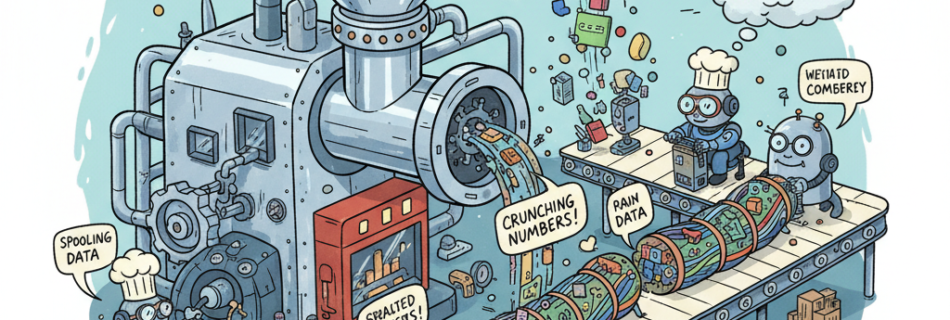
The sheer volume of Earth Observation (EO) data today—a planetary deluge of multi-spectral, radar, and LiDAR feeds is overwhelming traditional remote sensing techniques. For decades, analysts relied on meticulous, band-by-band spectral science, but this approach is simply unsustainable at scale of “new space”.  Enter the hot term of the moment,  geospatial embeddings, a core innovation …

It’s still all about the data..

The Model Context Protocol (MCP) addresses the fragmentation of AI training data by providing a standardized interface for data acquisition. This open-sourced solution simplifies data integration and enhances compliance by ensuring clear data access and tracking. While promising, MCP’s early-stage adoption raises security concerns and challenges related to interoperability.

A ticket to ride.. The Future of Travel: Geospatial Technology and the Rise of Location-Based Ticketing

Imagine a world where you never have to worry about buying the right train ticket again. Ok I know this does not sound like much of a problem, but then how well do you know the UK’s now mostly nationalised Railway system… No more fumbling for change, wrestling with a complex app, or trying to …

The Cat-astrophic Battle of Britain: My GenAI Film Fiasco

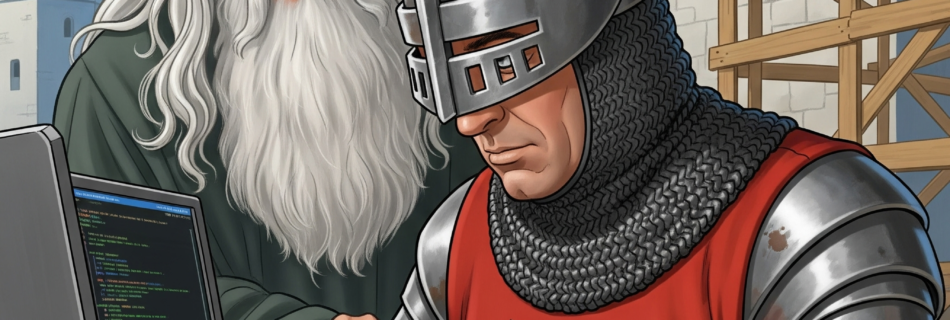
It’s the end of summer so I give you a light hearted experiment in the application of Generative AI. My quest to recreate the cinematic masterpiece The Battle of Britain, but with a twist, has hit a slight snag. The twist, you ask? Cats. Yes, I wanted to harness the power of GenAI to create …

The Quest for a Universal Geospatial ID: From the One Ring to the Holy Grail?

The geospatial industry has long been on a quest for a universally accepted system to identify real-world entities like buildings, roads, and businesses. Such a system promises seamless interoperability, but its pursuit has been fraught with challenges, often clashing with the commercial realities and vested interests of powerful data owners. Let’s explore this journey through …

A journey of a thousand miles ends with a single step. 

This famous phrase by Chairman Mao can be subverted to focus on the final step of a journey, which is particularly relevant to solving one of the hardest problems in geospatial technology: the final 10-metre problem. How can we provide high-accuracy pedestrian navigation or wayfinding to ensure users reach their actual final destination, such as …

Why Uber is not Geo-Taxi!

For years, the geospatial industry has grappled with an identity crisis, often resorting to a rather peculiar linguistic habit: slapping “Geo-” in front of any technology term remotely related to location. “Geo-analytics,” “geo-fencing,” “geo-marketing”—the list goes on. And don’t get be started on Geo-AI ! This pervasive prefixing, I’d argue, is a desperate attempt to …

Snap Map - Local Search

Snap Map the maps app you probably don’t use.. and that’s the point !

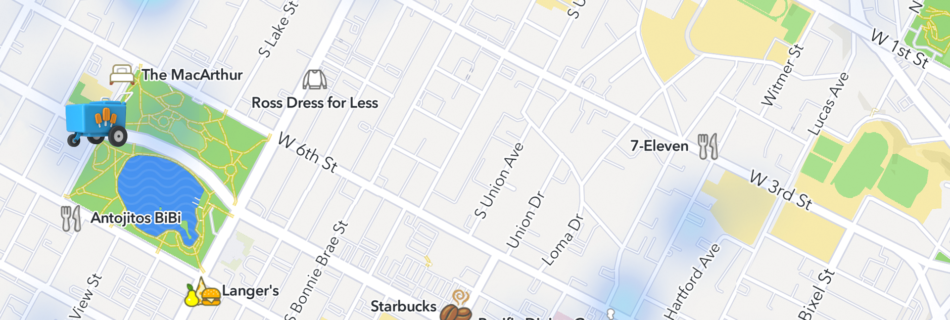
When Snap Map first launched within the Snapchat app, it was met with a mix of curiosity and privacy concerns. Yet, this integrated feature has quietly become a significant success story, particularly among its core demographic – Millennials. While perhaps not always the focus of mainstream tech commentary, Snap Map has proven to be far …

3D Tiswas style

For people of my generation the term Splat will always be associated with the Saturday Morning Children’s TV show ‘Tiswas” and was to the result of someone getting a “custard pie” in their face… Now the hot topic in 3D Geospatial rendering are Gaussian Splats.. In Geospatial 3D, Gaussian splats are used as for rendering …

What’s My Map?

It was a great pleasure to spend half a hour talking with my friend Jerry Brotton on his excellent History of Maps podcast, “What’s Your Map“. This excellent podcast series cover the history of cartography by getting people to select a single map to place it’s significance in the development of mapping. The podcast is …